ServicesGutter Repair
Gutter Repair in Charleston
Most gutters don't need to come down. They need a resealed seam, a few new hangers or a corrected slope. We find what's failing, fix that part and tell you plainly how much life the rest of the system has left.
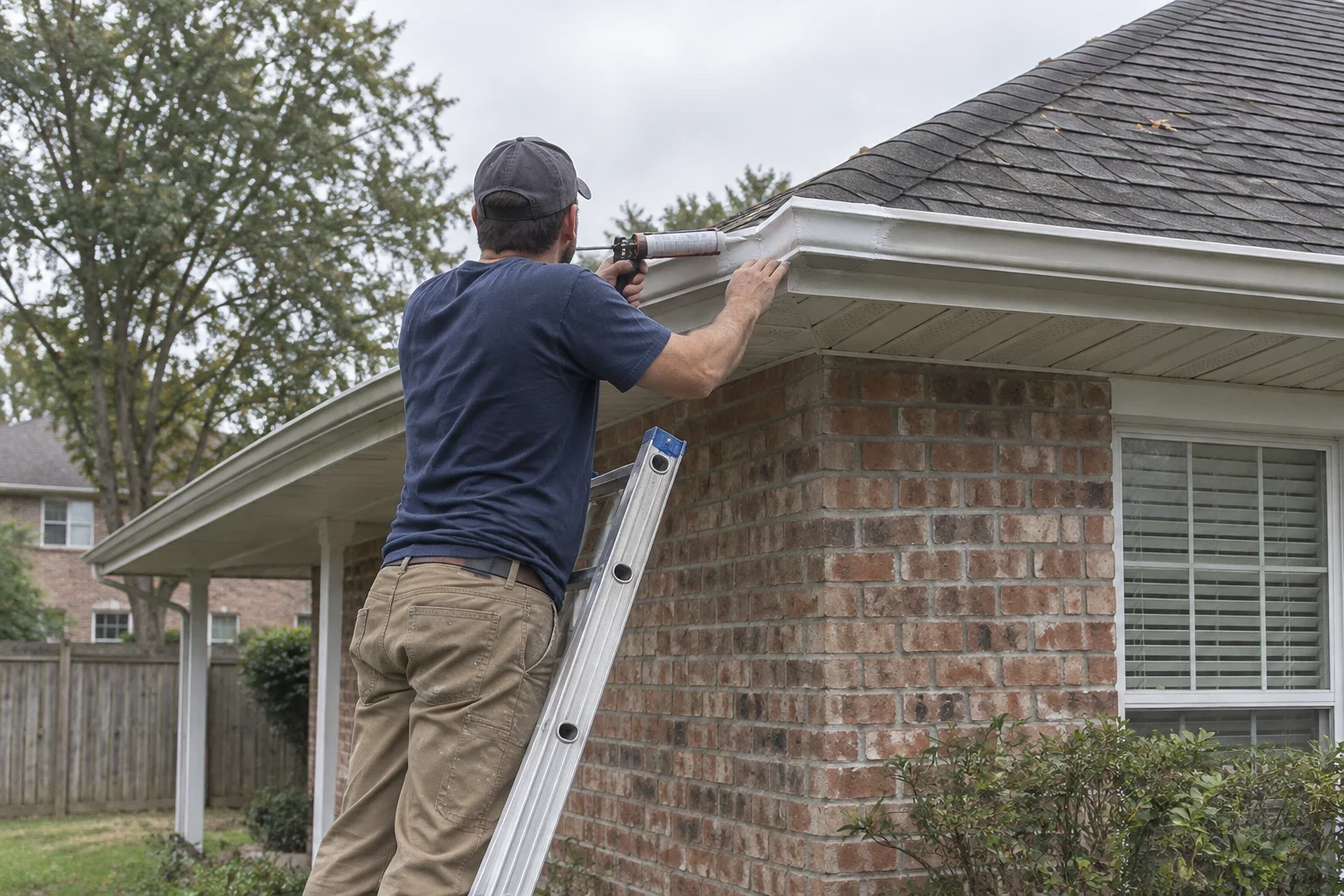
Fix the Weak Spot, Keep the Rest
Gutters rarely fail all at once. A seam opens up, a hanger lets go, or one run settles until water sits in the middle instead of draining. Leave it, and that small problem starts soaking the fascia board and the ground next to your foundation.
Our job is to catch it at that stage. We repair the part that's failing and leave the sound parts alone. When the system is past saving, we tell you that too, and gutter installation becomes the honest answer. Most of the time it isn't, and a solid repair buys you years.
What a Gutter Repair Covers
Resealing seams and end caps
Old sealant dries out and cracks, especially after years of hot sun. We scrape out the failed bead, clean the metal down and lay new gutter sealant so the joint holds.
Rehanging sagging runs
Loose spikes and bent hangers are the usual reason a gutter droops. We replace them with hidden hangers fastened into solid wood, spaced close enough to carry a full load of rain.
Correcting the slope
A gutter needs a slight, steady fall toward the drain end. If yours holds standing water, we reset the pitch so it empties after every storm.
Patching holes and rust spots
Small holes and pinhole rust get patched and sealed. If a spot is too thin to hold a patch, we replace that short piece instead.
Replacing damaged sections
A section bent by a ladder or a falling limb can be cut out and swapped with matching material, so you don't have to replace the whole run.
When Your Gutters Need a Repair
Water dripping from joints
If rain drips from a seam or corner, the seal there has given out. It tends to get worse every season.
A bowed or sagging run
A dip that shows from the yard means the hangers have come loose or the wood they're fastened to has gone soft. Hard summer rains speed up the damage.
Rain going over the front edge
When water spills over the lip and nothing is clogging it, the gutter may have tilted forward or lost its slope.
Peeling paint or stains on the fascia
Blistered paint and dark marks behind the gutter are signs of a slow leak. Finding it early can save the board.
A gap at the roofline
Once the back edge of the gutter pulls loose, water slips behind it rather than into it.
Water still sitting after a storm
Water left standing for days makes the gutter heavier, rusts it faster and draws mosquitoes.
What Happens on a Repair Job
- 1
You call us
Tell us what's wrong and where you see it. We book a time to stop by, and that consultation is free.
- 2
We look it over
We inspect each run from the yard and up on the ladder, then walk you through photos of what turned up. You'll see what needs fixing now and what can hold off.
- 3
Your estimate in writing
We give you an itemized estimate for the repair. When a new run is a better choice than a patch, we tell you and explain the reason.
- 4
The work itself
Most repairs need only part of a day. We place ladders carefully near siding and garden beds, and we collect old hangers, cut metal and bits of sealant before leaving.
- 5
Testing with water
We send water from a hose through each repaired run to make sure the seams stay tight and the flow goes where it belongs.
What Moves the Cost of a Repair
Repair pricing depends on what's actually wrong, which is why we look before we quote. Two houses with the same leak can need very different fixes. Your estimate is written out item by item, so you see where the money goes.
- How many problem spots
- One open seam is a short job. Several leaks plus a sagging run take more time and material.
- Height and access
- A single-story run over open lawn is quicker than a two-story run above a porch roof or thick shrubs.
- Matching your material
- Common aluminum profiles and colors are easy to match. Older copper or unusual sizes can take more work to source.
- What's behind the gutter
- If the fascia is soft, hangers won't hold. We show you that before any work starts so there are no surprises later.
Questions About Gutter Repair
Something not covered here? (843) 751-4238
Is it better to fix my gutters or replace them?
When the metal is in good shape and only a few hangers or joints are failing, a repair usually costs less overall. When rust runs end to end or most of the runs are giving out, patching only puts off the expense. We give you an honest answer once we've looked, and if it's a close call we'll price both.
How long does a gutter repair last?
A run that's been rehung or a seam that's been resealed the right way should hold for years if the rest of the gutter is in fair condition. Coastal salt air and lots of pine needles cut that time down. We'll point out what to keep an eye on so little issues are found early.
Will the new parts match my gutters?
Usually. Common aluminum colors and sizes are simple to match closely. If your gutters are older or less common, we'll let you know ahead of time if the new section may look a bit different.
Does someone have to be home while you work?
Usually not, because everything happens outside. We like to go over the job with you during the estimate. After that, we can call when the work is done and send you photos.
How can I stop the problem from returning?
Wet leaves and needles sitting in the trough are a leading cause of sagging and rust. After the repair, gutter covers or gutter guards keep most of that debris out. We can go over which suits your roof while we're there.
Get Your Gutters Working Again
Tell us what you're seeing, and we'll come take a look in Charleston or nearby towns like Mount Pleasant and Summerville. You'll get a clear answer and a written estimate.